Friday, February 24, 2017

What's in Bayfield?


To the onlooker from the beaches of Bayfield out onto the Apostle Islands, the scenery is striking for the scattering of land out in the protected waters.  Sailboats in the summer outnumber powerboats. Ferries take their designated line back and forth to Madeline Island carrying enthusiastic tourists. On the backside of Madeline, one of the great camping parks in the state offering wild beaches and ocean like streams flowing inward.  To watercraft, though, navigating this part of Lake Superior would have been a challenging but always dangerous prospect.  Thousands of shipwrecks line the bottom of Lake

Finn McCool

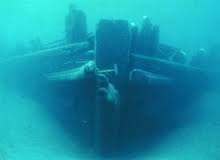
Superior, entombed in freezing water and often found no more than twenty feet from the surface.  Kayaking over one of these great wooden shipwrecks leaves the paddler full of an eery awe -- the shipwreck, by definition, means something bad happened.  Many sunk by fire, many sunk on purpose,  many pulled toward the shallow bottom by storm, and others just worn out, run down, and dead in the water.  The Finn McCool can still be seen only some feet off the shore of Bayfield in 10-20 feet of water.  The Lucerne, likely named after the city in Switzerland, launched in 1873, which hauled grain

The Lucerne
and later coal, made her last run with her mizzen boom broken from outside of Chicago, although at the time considered one of the sturdiest vessels in the lakes.  "In the midst of the storm the Captain of the steam barge Fred Kelley enroute for this place to load iron ore, discerned the ill fated schooner rolling and pitching about on the lake, evidently at the mercy of the wind and waves. She was seen soon afterward to turn about and head for this harbor, but was never seen again as far as known. The Steamer S.B. Barker...while passing the South Channel at Chequamic Point discovered the spars of a vessel just above the water, which proved to be the missing Lucerne. In the rigging were found three crews who were covered with ice from one to six inches. They were cut loose and taken to Bayfield." Today the hull of the ship is largely intact, lying in only 24 feet of water, much of the bottom settled into the sand bottom, but the top of the sternpost is at 15 feet and top of the centerboard is at 12.5 deep.  One wonders if these great wooden shadows might be visible below the ice.


The Pond

"Although he's already quite sturdy, he must be young. He's holding on tightly to the branch with his feet, not moving, as if flying exhausted him, and he's chirruping very gently." from "The Sparrow" by Jules Renard


The weather is poor enough and the trail still icy enough through its center, that I meet no one else at the Arboretum this morning.  When you pass the great Curtis Prairie in winter, it is not the abundance any longer that greets you, but the total lack of abundance.  The great restored prairie's abundance is its future potential, soon to come, of the spring migration of geese overhead, the rising of the Rattlesnake Master, the Purple Prairie Clover, the Big bluestem and the goldfinches that will trill at the approach of any feet.  You continue through scattering of marshland oak, silent as could be, more like sentries than trees. On toward the Lost Forest, the upper marsh turning to canopy, the trail, crisp by ice-molded footsteps, leads to another strangely silent space, Teal Pond abundant by ice and occurrence of virtually nothing.  As with the prairie, it is not what you do observe, but imagining what you don't -- the otter, the frogs, the snakes and every bird imaginable from the Wood Duck, the Black Tern, the Red-breasted nuthatch or occasional Blue Jay. I walk out to the end of the dock and, for better or worse, see the thick sheen of foot deep ice where the poles jut up from the bottom of the pond. The benches will soon be crowded again, the binoculars held tight to the eyes, watching for the red flash or the slow rotation of the head of the Great Horned Owl.  As I turn back toward shore, my weight shifts the wood of the dock just enough creek and moan, and the surface of the surrounding ice cracks and miniature shards slide for a couple of inches like tossed glass.

Wednesday, February 22, 2017

South Seas

"Santiago,' the boy said to him as they climbed the bank from where the skiff was hauled up. 'I could go with you again. We've made some money.' The old man had taught the boy to fish and the boy loved him. 'No,' the old man said. 'You're with a lucky boat. Stay with them.'"
                      –Old Man and the Sea


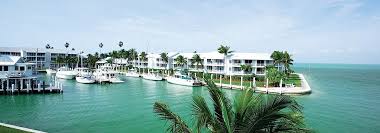
The grandfather had seen something six feet below the surface on the sand that the granddaughter had not seen.  Something stirred in him that he had not felt for many many years.  They both rose to the surface in unison.  Luckily the kayaks were still soft anchored and surrounding them. No other boaters would run over the top of them if they saw the kayaks.  One sailboat chipped up and down the line of the Costa some distance to the west and to the east the great South Seas resort stood, proud, gray, and the palm trees barely nudged against a smattering of wind.  The girl flipped her goggles up. "Did you see this?" She hauled up the mesh bag.  It was from one year ago, when they had made their secret trip across this very strait in the moonlight accompanied by two dolphins who seemed to chaperone them to the beach. "This is the bag of shells that I lost last time." Now the grandfather had not seen that. What a find! There was a bit of luck stirring he thought, and he examined the bag quickly, while continuing to dog paddle to stay buoyed in shallow water.  "Are you getting tired, Lily?" he asked. Her life jacket was in the kayak, and he could certainly get this for her.  "There was one other thing that I would like to dive for.  You go on up into your kayak and wait for me." He helped scoot her up and over the lip of the small kayak; it wavered side to side and nearly dipped into the water.  What a mess that would have been.  So easy to slip out of the kayak, so difficult to get back in from the water.  His heart stirred. The old man had read his books about privateering in these waters.  Privateering. Pirating. What was the difference was not much difference in action, but different in its backing. The privateer had his slip of paper from the crown, or ordinance from its launching merchant. The pirate did not have such a piece of paper.  How many privateers had become pirates without anybody knowing? What he saw at the bottom was something alright.  He pulled his goggles back up over this eyes and took an enormous breath.  He went straight down to the bottom like a thrown stick.  The sand had stirred up so he felt around the area that they had just reached.  At first, it was soft sand, so he circled around slowly so save his breath, but then there it was, something large, something wooden, this he knew and placed his hand around what he knew to be a part of the deck of a ship!


Tuesday, February 21, 2017

The South Seas
"The blotches ran well down the sides of his face and his hands had the deep-creased scars from handling heavy fish on the cords. But none of the scars were fresh. They were as old as erosions in a fishes desert." – Hemingway, Old Man and the Sea


It was not something that the grandmother would have appreciated, nor the mother.  The beach attendants might have yelled out, wondered, and dove in to help.  The grandfather knew that his granddaughter was of him, though, kindred spirits.  He knew this all the time, since Lily was born, as she looked into his eyes nearly as early as the mother's.  It is what you wish for, he thought then, to truly understand. She would be safe, of course, because she was as capable as any other and perhaps most importantly, she knew it.  They soft-anchored and dove over the side of their kayaks with masks on.  The light was like a chamber, fortunately for them.  The Captiva straight was nothing more that an false island of sand built up and channel running through.  Inside the chamber was an aqua as pure as the original seas, as blue as a paste, but clear, livable.  The old man showed her that he still had his breath held tight under water and smiled at Lily.  She smiled underwater and her hair churned with the minor movements.  She exaggerated, he knew, the size of her breath by puffing out her cheeks, but then dove down, like a loon might from the top surface of a lake, a few feet down to the bottom. This was a safe depth, he thought, and felt good about this afternoon dive of theirs.  The breath has a way of calling attention to itself, it is something like recurring alarm, saying, in essence, this is not your natural habitat, breath.  This happened to both of them because as they wiped their hands across the soft bottom they both saw the same thing and that very alarm that was supposed to force a surfacing was swallowed by the strength of mystery.  The old man saw immediate visions of the privateers through these waters, but for the girl, for Lilly, it was of the color, the beauty, the collection.  The grandfather pointed up to the surface for he knew it was time.  The heart began to beat harder, of course, as it does underwater.  The sun was itself a crystal at the surface of it. The world was silent.  The world, there, for that moment, was a lustrous blue.

Monday, February 20, 2017

Scenes from Evanston
When you live across from Lake Monona in winter, you assume most northern lakes are frozen.  The first morning in Evanston, taking a quick jog toward the Lake Michigan three blocks away from the Hyatt House on Chicago Street, what I saw was a wide open and wild blue ocean lined by white beaches, no snow! It was 50 degrees outside by that time and people were already sitting down on beach towels sunning, walking dogs and kids were boiling over in the string of parks that line Sheridan Avenue along the lake front. From these beach points you can see the silhouette of downtown Chicago to your right and Northwestern U. to the left.  Straight ahead, a long straight blue lined horizon.


 From NU campus moving south along the lake covers several miles, lined all by a walk and bike trail. During more standard spring months, the beach that sits closest to the campus is a boat, kayak and beach operation, which looks a little out of place empty underneath a sunny sky and open water.  It was at this little corner of the walkway that we saw a small girl, maybe three, toddling along the grass holding a dog on a leash each hand.  The dogs were small and well trained enough not to pull very hard.


The Hyatt House is brand new and beautiful with double black out shades, quiet, and full of kids playing games in the kitchen.  The real beauty of the Hyatt is that it is located within three blocks of the Lake Michigan ocean, and only blocks from fifty restaurants and shops, including a great find of a back alley bookstore, which we were just glad was still open.  Giordono's of the famous Chicago style pizzerias, is on the same block, and half a block away is Pete Miller's, an iconic steak and jazz club.


Or Lyfe Kitchen, a sort of random favorite of Julia's, with a few blocks.  This is a great and fresh new take on the cafeteria concept.  Order as you enter, find a seat, and then it is quickly served. Two water taps sit at stations for self-service.  Mahi soft shell tacos include a chayote slaw, avocado, chipotle aioli, salsa fresca and can be gluten free and vegan upon request.  Some menu items include what is called Gardein, a trademarked product that is Garden plus protein and is made from plant-based food textured like meat, that kind of place.  Unfortunately, although the tacos were great, one customer who ordered the grilled cheese wasn't quite as excited about the choice of healthy cheese.

Grosse Point Lighthouse is one of the wonderfully anachronistic landmarks of Evanston, an old city surrounded by old architecture but with about as modern an outlook as any city this side of San Francisco.  Built as far back as 1873, this was the lead lighthouse marking the approach of Chicago for ship traffic. This area was first chartered by two names familiar to the upper midwest and especially the Mississippi River Valley, Marquette and Joliet.  Today it is a crumbling tour but as the sunlight dims, as you look up into its hooded prism, the light still rotates for would-be night traffic.


The Welsh-Ryan basketball auditorium, a mile up city from the lighthouse, is a throwback stage for basketball.  Mostly bench seating, relatively small for a big-10 venue, and hot in the rafters, the place is a quaint reminder of a time in basketball when the game was more about the game than the place.  The mascot for Northwestern is the wildcat; at timeouts and before opposing team free throws, the young girls in the crowd screamed out growls.  NU beat Rutgers by only a couple of points and hold out fair hope for reaching the NCAA tournament, having reached 20 wins in the regular season so far.

When all else fails, when Giordono's is booked and the tapas joint just down the street is a 20-minute wait, duck into the Whiskey Thief, a brand new stylish restaurant that takes its name from a position that the whiskey taster in a distillery used to hold.  Here the Scottish salmon is cooked to perfection and the Sprites are served in double lip glasses shaped like old whiskey samplers.


Sunday, February 19, 2017

Riverside Ovens
Test Kitchen


2. Mediterranean Bake


The Mediterranean Pistou breakfast eggs recipe has a sound of sophistication but its beauty is its simplicity and the ease of the process of an egg bake.  Even though poaching, frying and the omelette


can all take a level of fine art to achieve, the egg bake concept, similar to the frittata, has more to do with the placement of the ingredients and a willingness to hover over the baking process.  The Mediterranean plan begins with diced tomatoes heating in a pan with seasoning.  Add to this a handful or two of white beans, warming through and making sure that the tomatoes cook long
enough to break down and soften but not burn.  Crack and open four eggs into separate portions of the pan, let heat up through to set just a bit then go ahead and bake in a 325 degree oven until the eggs completely whiten and the glossy fluid over the top disappears.  Pull out the eggs -- kitchen glove on hand -- and drizzle pesto to personal liking over the top.  Cut into four portions and this


simple recipe is achieved without fail.  The great part of this style of egg cooking is that it opens up the possibility for adding virtually any ingredients underneath and over the top of the eggs.  Various peppers could be softened underneath, maybe even red potatoes, varying beans, or maybe asparagus.  Over the top could be cheese or a hollandaise sauce.  The important part is to know that the baking is simple and takes only time not necessarily art.


Friday, February 17, 2017

"The whole extent of the South Seas is a desert of ships; more especially that part where we now sail. No post runs in these lands; communication is by accident; where you may have designed to go one thing, where you shall be able to arrive another." – Robert Louis Stevenson, from In the South Seas


And so this was the thirty-third consecutive year that the old man had come to South Seas at Captiva Island, Florida.  Here, the water had maintained its aqua green coloration; its filmy green lining that seemed to hover above the horizon of the surface of the water in the distance; the sand, at spots, fluffy and near white; at others, as you walked down further toward where the water meets, all ripples of mixed shaped shells and one had to be somewhat watchful of each step.  He learned to wear tight fitting sandals many years ago as he experimented with wading in the water more and more often and those sandals came in more than a little handy, made him much less fearful of the cold and the common shards of shells that every tourist stumbles on as they bathe and frolic in the Gulf of Mexico.  This would not be his last trip, but it might be the very last that his granddaughter, Lily, might be along.  His oldest grandson, Thomas, had already grown up, lived now, temporarily, in the south of France as wine distributor.  How could he contend with such a place as Aix en Provence, of the Luberon?  Lily was not as old as that, but she had kayaked and sailed virtually every inch of these nearby islands of Cabbage Key, Useppa, Caya Costa.  The old man used to tell stories of pirates and privateers as they would make their heated dash from the main island at Captiva over to the Caya, drifting through the partial mangos, and past the lumbering manattees underwater.  There had been
much adventure then; he could easily remember the day that they stopped as they were paddling over what was then called fisherman's slough, set a simple anchor, and challenged one another to flip in the water directly over the hull of the kayak to snorkel.  There would have been no understandable way to predict what they found there a mere five feet down in the water, through the clutter of shell, and the hazy clouds of sand stirred up...