Thursday, October 13, 2016

Arboretum Diary

"The wild things that live on my farm are reluctant to tell me, in so many words, how much of my township is included within their daily or nightly beat.  I am curious about this, for it gives me the ratio between the size of their universe and the size of mine..." Leopold, Sand Co. Almanac


10/13

The first hoary frost puts a crystalline damper over the singing of the sedge meadow and wetland.  Leaves of the red eared grassland that used to perk up to grab the morning dose of sunshine now stand steady, still living at the end of the season, but beginning their new stances as they droop and


ready for the great fall.  Half of Curtis Prairie stands in light; half in shadow; the difference between the two is more than a hand full of degrees temperature.  As you duck back under the looping trails


which lead from the Prairie under the stand of jack and white pines, the dormant pine needles seem to refrigerate these miniature valleys and would certainly persuade the small rodent in one direction as opposed the other.  The bright cool of early autumn is something that every artist within beholds, determines, one or


another -- through photos or words or more hikes with dogs through the woods -- to bottle and preserve as the best of the best like a fine vintage.  Lush foliage, which used to interrupt the sight of the smoldering yellow bulb in the sky are now clear and it is the craggy black spines of the marsh oaks that seem more like swift dashes off the sharp end of a charcoal pencil than limbs.  As the sounds of the nearby highway dim, the visitors rush in for the season, learn again to admire now that the mosquitos have retired, and will gladly tell you of the stories of the favorite paths.

Wednesday, October 12, 2016

What's in Boulder?


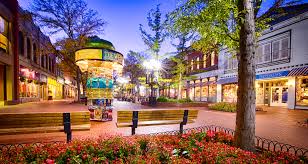
Bru Handcrafted Ales and Mt. Sanitas are only the tips of the Flatirons.  Considered the number one outdoors city in America, in Boulder there are enough hiking and biking locations in and around the city that it is said that lifelong locals frequently find themselves in new and yet unseen surroundings.  From the Hyatt at Pearl Street downtown Boulder, a three mile bike ride along the pride of the city, the Boulder Creek


Path, leads to the Chautauqua Park, which serves as a sort of city gathering point of close trails
stemming up into the Flagstaff trail system in one direction and the Flatiron numbered system in the other.  Royal Arch is considered a nifty geologic feature, a narrow, fractured Flatiron whose middle


has fallen away and that still miraculously holds steady despite a crack clean through.  In peak summer, the trail pulls the hiker through a little bit of everything -- a kind of Rocky Mountain sampler -- forests, meadows, a talus field, a stream crossing and a little spring.  No more than a


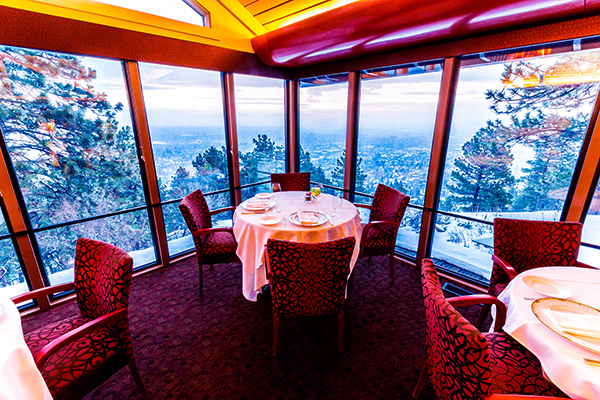
couple of miles from the hotel, two hours later, smack in the middle of a raw mountain world.  Up along the other side of valley, still connected to the Chautauqua trailhead system, is the Flagstaff summit.  Not only does the nature center serve as a great destination point for visitors, but renown Flagstaff House Restaurant, itself built into the side of a mountain, stands as an overlook to the city,


and considered one of the top romantic restaurant destinations in the country.  Flagstaff House has been continuously owned and run as an elegant vista restaurant since 1971.  The current executive chef began here as a busboy when he was 14, then went on to chef training around the country and


most famously under Thomas Keller, the modern American / French cuisine master from French Laundry in the Napa Valley.  A nice place to sit and overlook the day's climb.


Tuesday, October 11, 2016

What's in Boulder?


Mount Sanitas and Bru Beer would be enough to make the 16 hour drive. Mount Sanitas, considered a very popular yet rigorous trail route locally, is a great way to acclimatize to the starting elevation 5,000.  The trailhead here is so close to town that from the Hyatt Place Pearl Street, it is easy enough to bike to, then off and up the Sanitas Valley nearly 2,000 feet to the eventual top where a near handful of Boulder sights lay looming like mountain wonderland, as the Indian Peaks Wilderness and Continental Divide stand out to the right, behind and the south is the top of the first Flatiron Mountain rising above the


Chautauqua Park only a few miles away. Flatirons are the defining landmark of Boulder, a series of mammoth jagged mammoth peaks pushed up out of the earth some 40 million years ago and named after the shape of the old clothes ironing tool, and visible from virtually every angle and every nearby hike.  Below the peaks, nestled in near the famed Pearl Street Main Parkway is Bru Handbuilt Ales

and Eats, of a variety of dozens of brewpubs that dot the city limits.  Owner Ian Clark's approach to this brewpub is the reverse of most others like it – he didn't start with the backyard garage one barrel system and turn it into a restaurant, but instead he began as a fully trained chef who then decided he


wanted to brew craft beer to go along with his cooking creations.  The result are great pairings like the Kolsch with the famous banh mi sandwich or the Amarillo IPA with the chile rubbed hanger steak.


Thursday, October 6, 2016


"Poking up from the ground barely above my knees,
already there's holiness in their coiled roots....

A thousand years from now who will stroll
   among these trees,
fashioning poems on their ancient dragon shapes?"
    – "Little Pines" by Chi'i-Chi


A thousand year mystery unfolds as moss along
the tendens of the leaning creekside willows.
The boarded footpath leads this way and that
modeled from the caravans of old deer paths.
We look up and see one half of yin and yang,
the sky unknowable, horizons of blue ending at nothing.
Below, the substance of what is known holds
every foot step up, miracles, unmovable.


On the Yahara A-Z


U.

Uncut pie, Pizza Brutta.  Wood-fired Neapolitan pizza, for those obsessed, is a traditional art form.  To the degree that at this quaint little Monroe Street Jewel (nearly within eyeshot, thankfully, of Edgewood school), the owner has installed strict rules as to how the art form is created by the


'pizzaiolo,' or certified Verace Pizza maker.  Some of the stuff they're keeping track of? First, let's make sure we're staying within the confines of the centuries-old art form: a dough that is made only by flour, water, sea salt, yeast and tomatoes grown on the volcanic soils of Mt. Visuvio, extra virgin


olive oil, and fresh mozzarella.  Brutta ensures these strict guidelines by using a fresh Wisconsin mozzarella substitute for what is known as "fior di latte" or "the flower of milk." The tomato sauce, like the original, comes only from the volcanic soils, believe it or not, of Mt. Visuvio just outside Naples in Italy's Campania region. The crust, sometimes the most important for many pizza eaters, is made simply with organic flour, yeast, water and salt and is "opened and stretched entirely by hand.


The result is a crust that is thin on the inside and thick and airy on the ends creating what the Neapolitans call the "cornicone....Neapolitan pizza is best eaten uncut and with a fork and a serrated knife." Within 10 minutes of the front counter order, the famous Brutta pizza is steaming at your table side and needless to say the simplest elegance possible to the point where, if you closed your eyes and continued to bite the perfectly thin and sweet pizza you might think you were eating dessert not the main mid afternoon meal.

Wednesday, October 5, 2016

Sketches from Spain
Empanada


"Simply put, Barcelona is unique, with a language, history, and culture separate from the rest of Spain and found nowhere else. If you're in the mood to surrender to a city's charms, let it be Barcelona."  Rick Steves, Barcelona


It is time to take a short tapas stop at the Cafe Granja Viader in Barcelona at Xucla 4.  Here is where the empanadas are made to pure perfection; they have been creating these savory pies for as many years as there has been a small kitchen placed in the back.  There are many things that the famous


pies might include. Anything from bacalao con pasas (salt cod with raisins), to vieras (scallops) or fresh herberechos (cockles).  You can smell the reach of each of these as they mingle out into the seamusk that surrounds the city like the steam of one very large restaurant.  The Empanada do Lomo is that with pork and red peppers.  How simple, how wise the combination.  As the dough is formed it


is time to sauté onions, then the bell pepper until tender and sweet; brown the pork in its pre-made marinade and place the concoction into the divided dough, placing one half over the top and crimping the edges.  Feel free to use the excess dough for decoration, maybe the shell of a marlin fish?  Paint the top of the dough with egg and let it bake 20 to 25 minutes.  Once out, let it cool enough to firm, then cut in such a way that you can add a slice over the lid of the wine glass.  They will come back.
Arboretum Diary

"Nature never wears a mean appearance. Neither does the wisest man extort her secret, and lose his curiosity by finding out all her perfection. Nature never became a toy to a wise spirit. The flowers, the animals, the mountains, reflected the wisdom of his best hour, as much as they had delighted the simplicity of his childhood." – Emerson, from Nature


10/5

Emerson was the great pioneer of all modern nature writing; it was only after him, and from his influence that Thoreau and Whitman found the courage to set down on paper what they had no doubt already considered themselves, but didn't have the philosophical permission, as set out by Emerson.  Emerson, fortunately, was right in his most elemental assumptions, that man, nature, and spirit are a connection; that, when the man becomes, as he called it, the "transparent eyeball," then it was at that


moment where not merely the intellect could comprehend that connection, but it could be felt.  Thoreau certainly went out to prove that an elongated engagement with nature (approx. 3 years) was a worthwhile project and that here we might find man in accordance to his own divine wisdom, as projected by both spirit and nature, and found his place in things.  It was also always the contrast to these things that Emerson and Thoreau (not so much Whitman, who also found his scenes in the city),  found in the more mechanical pursuits associated with 'town' that did not allow for the same type of


true insight.  At this moment, it is Thoreau that seems to be finding the most applicable credit of the big three American nature writers, as we see very real examples of young folks going off grid, or owning small farms for the sake of the process and real nourishment or to seek some form of spiritual insight by living small.  Emerson's more romantic tendencies does not strike as many converts in a time in culture when data and identity form culture itself and the small farmer is but a practical run away.  To wax poetic over the view above at the Wingra Creek freshwater spring leaking from the main Arboretum grounds into the marshes at Lake Wingra, is subject to too much analysis and data, information and signage, to be captivating in a religious sense; and yet what a classroom it is.  To set out tree stumps as desks, to rid the wall clocks and exchange those for the distractions of the looming


owl in the branch above the inlet or the autumn duck quack for the headphones would be enough to replace empty distractions with wisdom of observation.  The mere notion of such a classroom, however, will be unheard of until Emerson again finds some more popular sway with readers.  To regain wisdom and insight in the face of information can only be cultivated by sheer time spent walking... the Wingra or Galistel Woods. The curiosity to link the species tag of a particular tree at Longenecker Woods to the 'feel' of the forest, its benefits, and final transferal to others is the good work of only a small contingent of people.  As the green of the woods is shown to the child it carries over in the mind of the adult.  The child who sees only pixels will see and seek out only pixels.